
How to Shoot Kodak Gold for the Best Possible Photos
Kodak Gold is 90% as good as Portra, but with none of the associated pretension. Here’s how to get fantastic results with my favorite film.

Everything to do with the film development process. From guides on the different types of developers to agitation, edge effects, fixer types, chemical storage, and more!
Kodak Gold is 90% as good as Portra, but with none of the associated pretension. Here’s how to get fantastic results with my favorite film.

Ilford Delta 3200 is perfect for low-light photography. It has the widest exposure latitude of any film, and a beautiful grain structure.

Tri-X is the most popular B&W film stock, making up as much as 80% of all films sold. So what’s the best way to develop it at home?
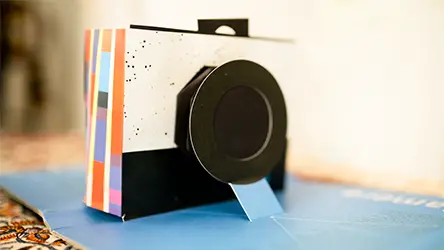
Film photography is absolutely magical. And caffenol made from household ingredients makes it a fun, safe, and artistic exploration for kids.

This guide shows the best developers and methods to achieve fine-grain images with all film types, and even when pushing 3 stops or more.

With great power comes great responsibility, they said. But I didn’t listen. Here’s what I found out when I pushed Kentmere 100 to ISO 800.
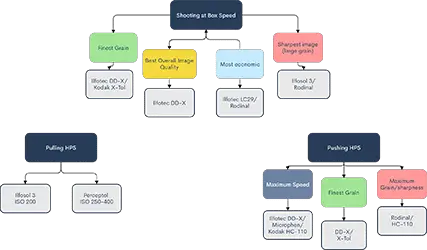
HP5+ is an extremely versatile film. Despite having an ISO 400 box speed, it can easily by pushed to ISO 3200, or pulled to ISO 200.

Film developing chemicals go bad fast if they’re not properly taken care of. Follow the steps in this guide to get the most out of your chems.
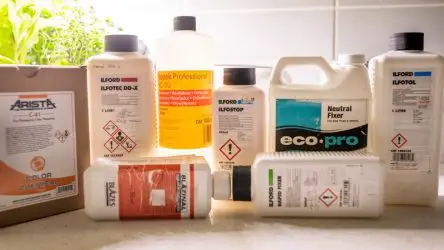
Getting started with developing film is easy, and the good news is you don’t need much equipment. This guide shows only what you need.

I have eczema, but that hasn’t stopped me from developing and printing film photos. Here are the changes I made to keep eczema free.